Tamil Language
Explore how Tamil Language is taught through engaging lessons, cultural celebrations, and enrichment programmes that build language skills and a love for Tamil heritage.
Tamil Language
Learning Outcomes
Through the integration of SLS, e-Pedagogy, ICT and E21CC, students will be able to:
Enhance Language Proficiency: Strengthen the six core Tamil language skills through engaging, interactive and technology-enhanced learning experiences.
Develop Self-Directed Learning: Take ownership of their learning by engaging in SLS activities, reflecting on feedback and monitoring their learning progress.
Foster Collaborative Learning: Develop communication and collaboration skills by exchanging ideas, sharing perspectives and working effectively with peers.
Strengthen E21CC: Develop critical thinking, creativity, adaptability and metacognitive skills to become confident, independent and future-ready learners.
Teaching Approaches
Tamil Language (TL) lessons are designed to incorporate e-Pedagogy (e-Ped), Information and Communications Technology (ICT) and Emerging 21st Century Competencies (E21CC) to enhance students' learning experiences and develop their proficiency in the six core language skills: listening, speaking, reading, writing, spoken interaction and written interaction.
In alignment with the school's whole-school approach towards the use of the Singapore Student Learning Space (SLS), the Tamil Language Department leverages SLS as a key platform to facilitate meaningful and engaging learning experiences. Through the purposeful integration of e-Pedagogical strategies and ICT tools, teachers design interactive and student-centred lessons that promote active participation, collaboration, self-directed learning and critical thinking. SLS learning activities also provide opportunities for students to receive timely feedback, reflect on their learning and take greater ownership of their progress.
The department also places emphasis on developing students' Emerging 21st Century Competencies (E21CC) by incorporating collaborative learning, communication, critical thinking and creative thinking into daily teaching and learning. Through technology-enhanced learning experiences, students are encouraged to exchange ideas, work collaboratively, solve problems and express their thoughts confidently in Tamil. These approaches aim to make Tamil Language learning more engaging, meaningful and relevant while nurturing confident, independent and future-ready learners.
Department Programmes
Our line-up of programmes include:
Tamil Language department programmes by level
Programmes | Levels |
|---|---|
1. Budding Reading Programme | P1 |
2. Pongal Celebration 2026 | All |
3. Mother Tongue Fortnight 2026 | All |
4. Deepavali Celebration 2026 | All |
5. Tamil Literary Competitions | All |
Buddy Reading Programme
The Tamil Buddy Reading Programme for Primary One students is a structured initiative designed to enhance Tamil language proficiency among young learners. Tailored specifically for Primary 1 students, this program aims to cultivate a love for reading in Tamil while improving language comprehension, vocabulary and overall literacy skills.
Pongal Celebration
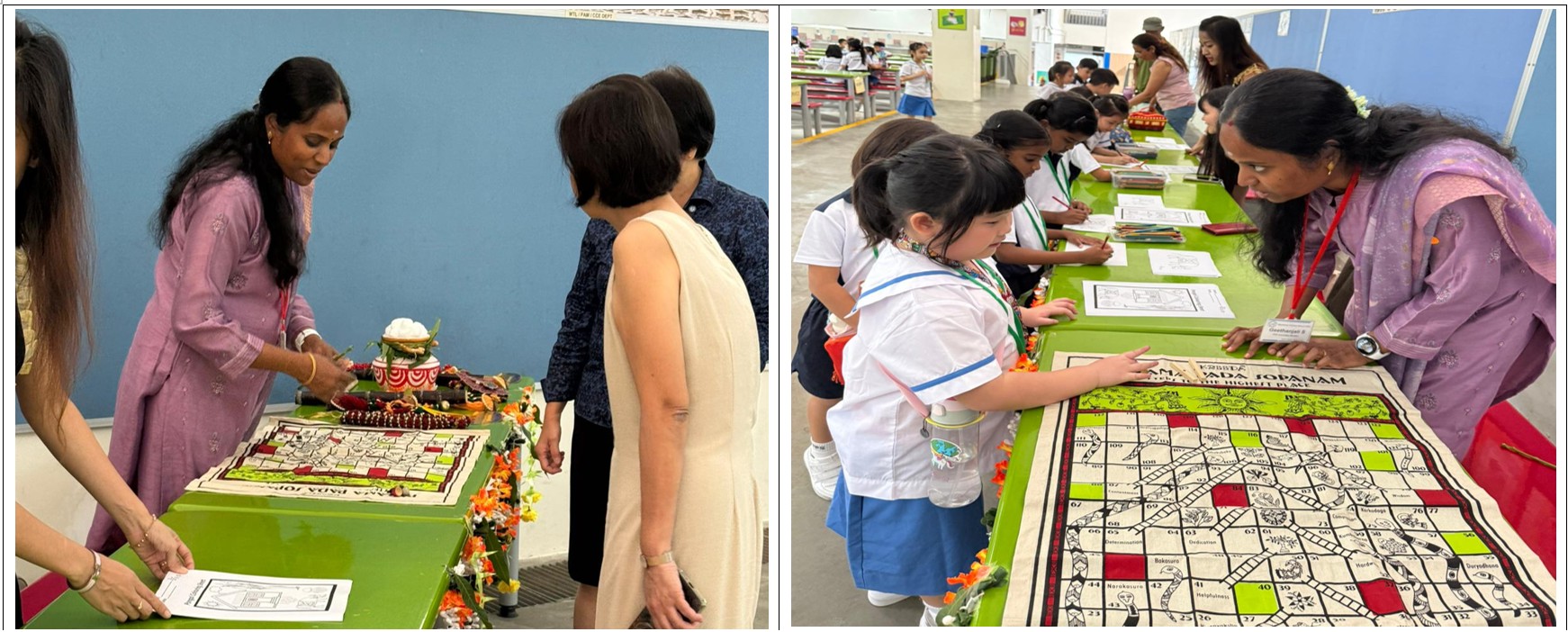
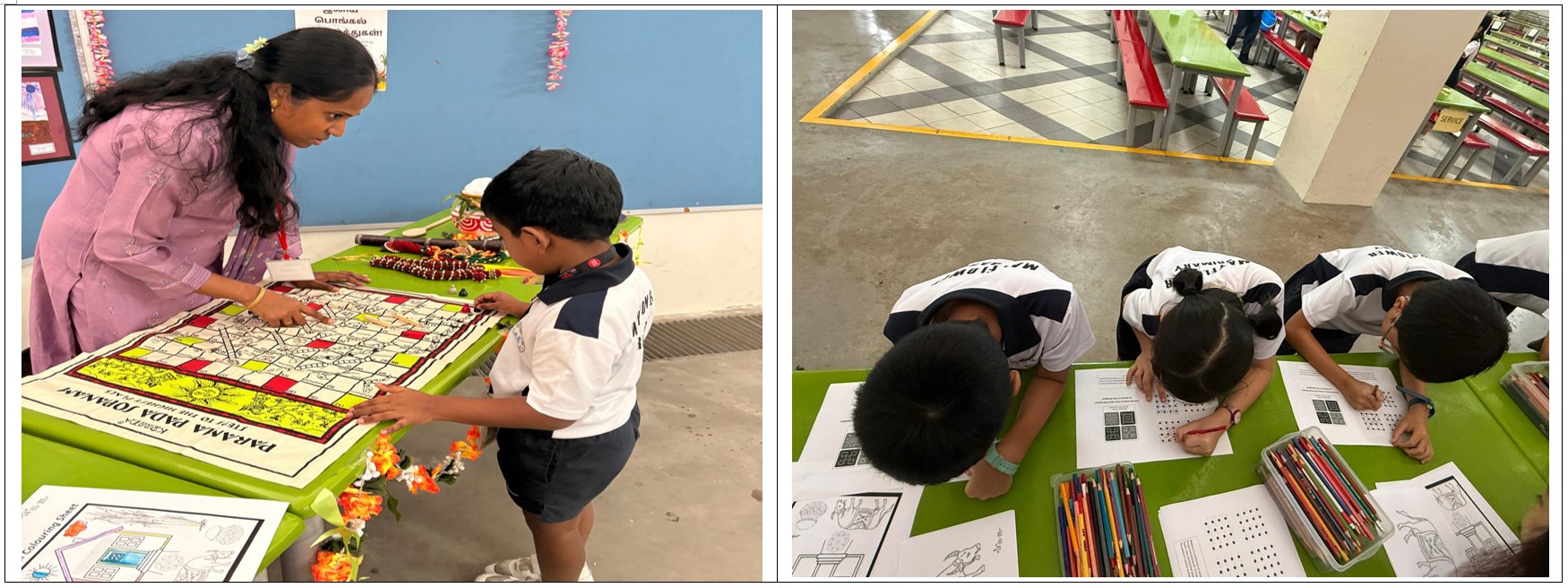
The Pongal Celebration 2026 was held on Wednesday, 14 January 2026, at the Upper Canteen. The venue was decorated with Pongal-themed decorations, including traditional Pongal pots and kolam designs, to create a festive atmosphere. An educational video titled “What is Pongal About?” was screened during recess to help students understand the significance and traditions of the festival. Students participated in various level-based activities, including a Pongal Colouring Contest for P1 and P2, Pongal Pot Designing for P3 and P4, and an SLS Pongal Pop Quiz for P5 and P6. These activities aimed to promote cultural awareness, creativity and appreciation of Tamil traditions while providing students with an engaging and meaningful learning experience.
Mother Tongue Fortnight Activities
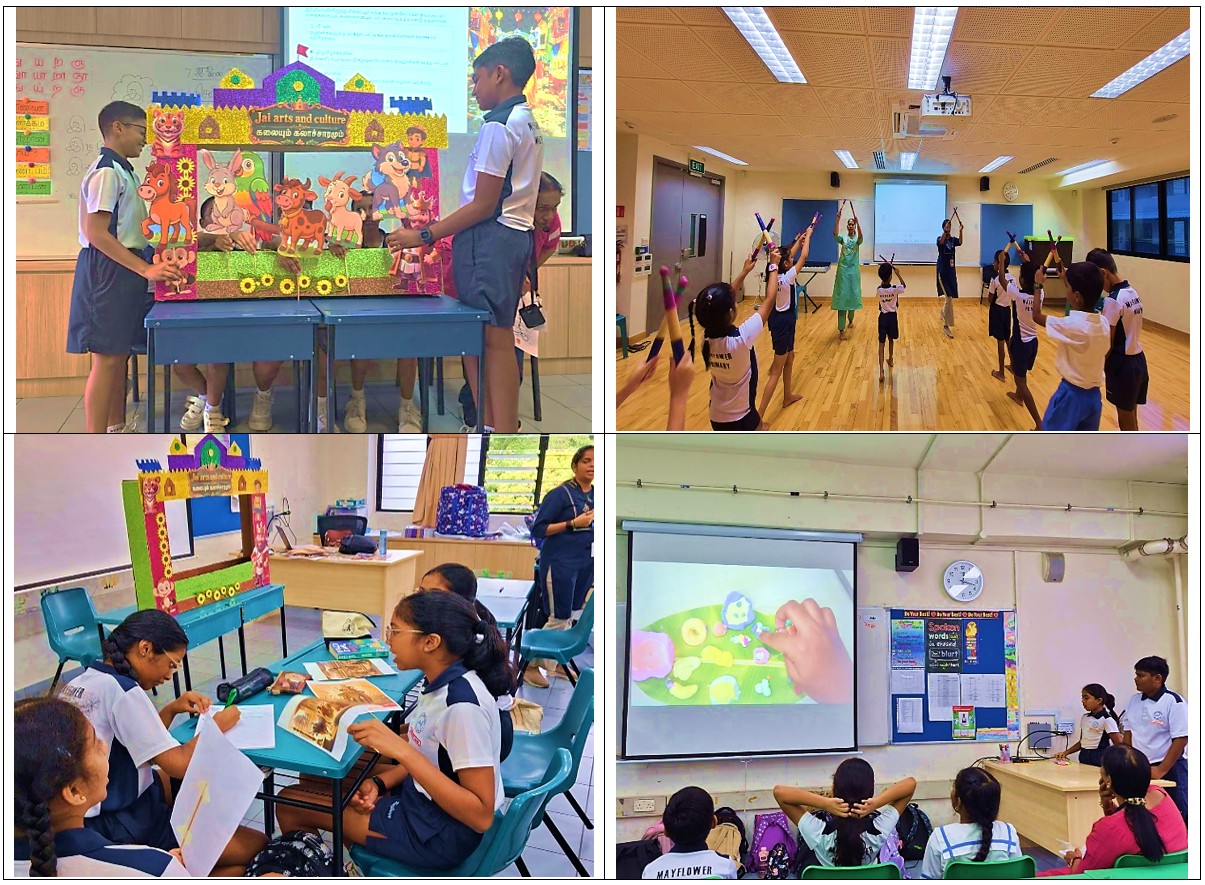
As part of Mother Tongue Fortnight 2026, the Tamil Language Department organised a series of engaging cultural workshops in collaboration with Jai Arts and Culture Pte Ltd to deepen students' appreciation of Tamil language, culture and traditions. Students participated in level-based hands-on activities, including Kolattam (traditional stick dance) for Primary 1 and 2, Banana Leaf Clay Experience for Primary 3 and 4, and Stick Puppetry for Primary 5 and 6.
Through Kolattam, students learnt about traditional Tamil folk dances while developing their coordination, rhythm and teamwork. The Banana Leaf Clay Experience introduced students to the cultural significance of banana leaves in Tamil traditions while allowing them to explore their creativity through clay modelling. Through Stick Puppetry, students learnt about traditional storytelling techniques and developed their creativity, communication and self-expression skills. These hands-on experiences provided meaningful opportunities for students to connect with their cultural heritage, appreciate traditional art forms and foster a greater interest in learning the Tamil language.
Tamil Literary Competitions
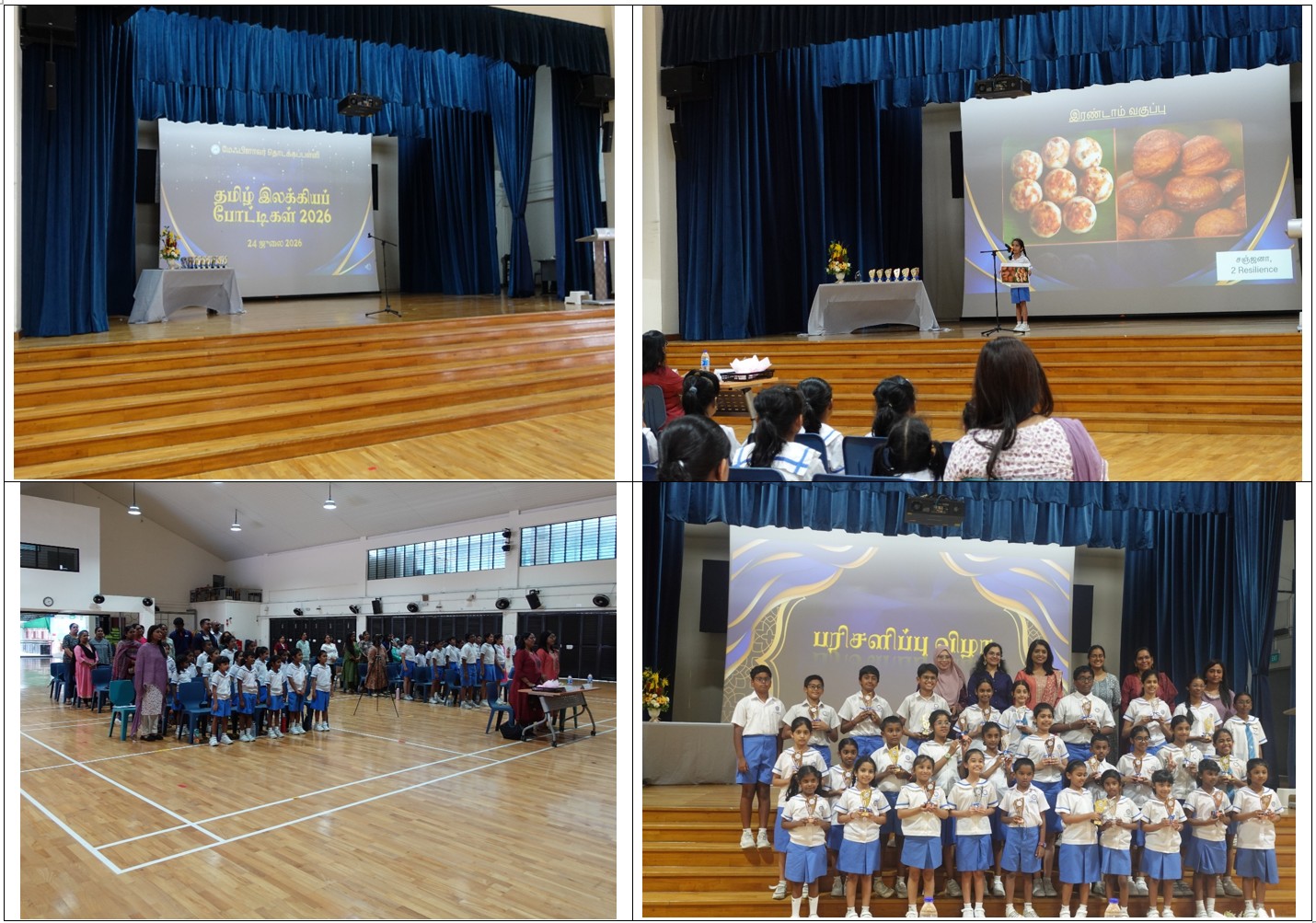
The Tamil Literary Competitions 2026 provided a meaningful platform for students to showcase their Tamil language proficiency, creativity and public speaking skills while fostering a deeper appreciation for the Tamil language. The Final Round was held on Friday, 24 July 2026, at the School Hall, featuring the top three finalists from each level who had successfully advanced through the qualifying rounds. Students participated in three categories: Show & Tell (P1 & P2), Storytelling (P3 & P4), and Oratorical (P5 & P6). Through these competitions, students developed their confidence, communication skills, creative thinking and ability to express their ideas effectively in Tamil.
The competition was honoured by the presence of two distinguished guest judges, Mrs Thilagamani Sivanandam, former Vice-Principal of Mayflower Primary School and current Vice-Principal of Pasir Ris Primary School, and Mrs Yanasagaran Chetra Devi, Subject Head at Montfort Junior School. Their expertise and valuable feedback contributed to the meaningful assessment of students' performances. Parents and guardians were also invited to witness the Final Round, providing an opportunity to celebrate their children's efforts and achievements.
The event concluded with a Prize Presentation Ceremony, recognising the accomplishments of the finalists and consolation prize recipients. Overall, the competition encouraged students to embrace the Tamil language with pride, develop a passion for Tamil literature and strengthen their confidence in communicating effectively. It also served as a valuable opportunity to nurture students' linguistic abilities and promote a lifelong appreciation for the Tamil language and its rich literary heritage.
Deepavali Celebration
The Deepavali Celebration 2026, held on 13 November 2026, provided a wonderful opportunity for students to immerse themselves in the rich Indian cultural heritage while fostering inclusivity, kindness, compassion and appreciation of cultural diversity. The celebration began with an engaging presentation highlighting the significance of Deepavali, also known as the Festival of Lights. Through captivating visuals and storytelling, students learnt about the triumph of good over evil, the importance of lighting oil lamps, family traditions and the values of spreading kindness and positivity.
Following the presentation, students participated in an interactive Deepavali quiz, where they enthusiastically answered questions about the festival's traditions and customs. The celebration continued with an exciting Karagam Balance Challenge, where student volunteers attempted to balance decorative pots on their heads while picking up coloured clothes from the floor. This activity introduced students to the traditional Karagam folk dance while encouraging balance, concentration and coordination.
The stage then transformed into a vibrant runway for the Traditional Indian Attire Fashion Parade, featuring students dressed in colourful sarees, lehengas, kurtas and dhotis. Through this segment, students gained a deeper understanding of the significance of traditional Indian clothing and the cultural meanings behind various colours, patterns and designs.
The celebration concluded with a lively Indian dance performance, showcasing energetic movements and vibrant music that captivated the audience. Overall, the celebration provided students with meaningful opportunities to appreciate Indian traditions, embrace cultural diversity and understand the importance of spreading light through kindness, compassion and respect for others