Applied Learning Programme (STEM @ MFPS)
Applied Learning Programme (STEM@MFPS)
Introduction
At Mayflower Primary School, our Applied Learning Programme (ALP) provides students with authentic and meaningful learning experiences that connect classroom knowledge to real-world issues. Anchored on sustainability, innovation, and environmental stewardship, the programme nurtures students to become creative thinkers, responsible citizens, and confident problem-solvers.
Through hands-on learning experiences across different levels, students explore how Science, Technology, Engineering, and Mathematics (STEM) can be applied to address environmental challenges and contribute towards a more sustainable future. From hydroponics and urban farming to coding and environmental advocacy, students are encouraged to inquire, collaborate, design solutions, and reflect on their role in caring for the environment.
Our ALP also aims to develop important 21st century competencies such as critical and inventive thinking, communication, collaboration, and social awareness through experiential and values-driven learning opportunities.
Objectives
Our Applied Learning Programme aims to:
-
Develop students’ curiosity and interest in Science, Technology, and sustainability.
-
Provide authentic and hands-on learning experiences that connect learning to real-world contexts.
-
Nurture creativity, collaboration, and problem-solving skills through inquiry and design thinking.
-
Equip students with basic coding and STEM competencies to design meaningful solutions.
-
Cultivate environmental stewardship and awareness of sustainable living practices.
-
Encourage students to become active contributors towards a greener and more sustainable community.
Our ALP Programmes
GreenCoding @ MFPS (Primary 4 to Primary 6)
GreenCoding @ MFPS introduces students to coding and computational thinking through meaningful and purposeful applications. All Primary 4 to Primary 6 students participate in coding workshops where they progressively build their programming skills using block-based coding and technology platforms such as Scratch, Micro:bits and PictoBlox.
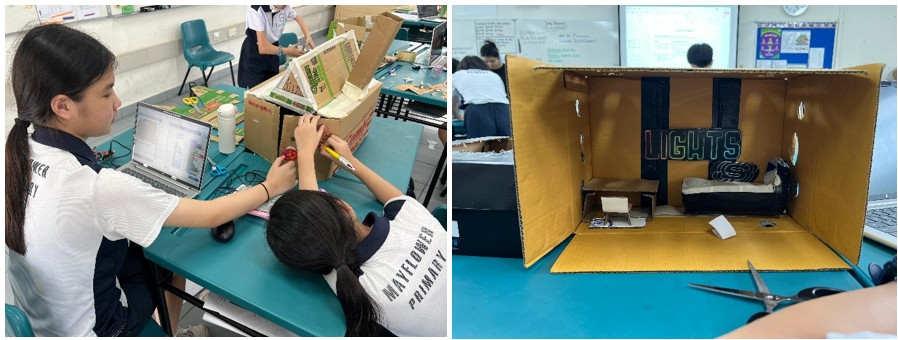
Students learn to apply the Design Thinking Process to develop prototypes that address sustainability-related issues such as environmental protection, water conservation, energy conservation, and renewable energy. Through these experiences, students strengthen their problem-solving abilities while learning how technology can be used responsibly to improve everyday life and support environmental sustainability.
Hydroponics Growing Experience (Primary 2)
Science education at Mayflower Primary School begins from the lower primary years through engaging and experiential learning opportunities. As part of the Programme for Active Learning (PAL), Primary 2 students participate in a Hydroponics Growing Experience where they explore how weather, flora, and fauna influence daily life, and discover how urban farming contributes to food resilience in land-scarce Singapore.
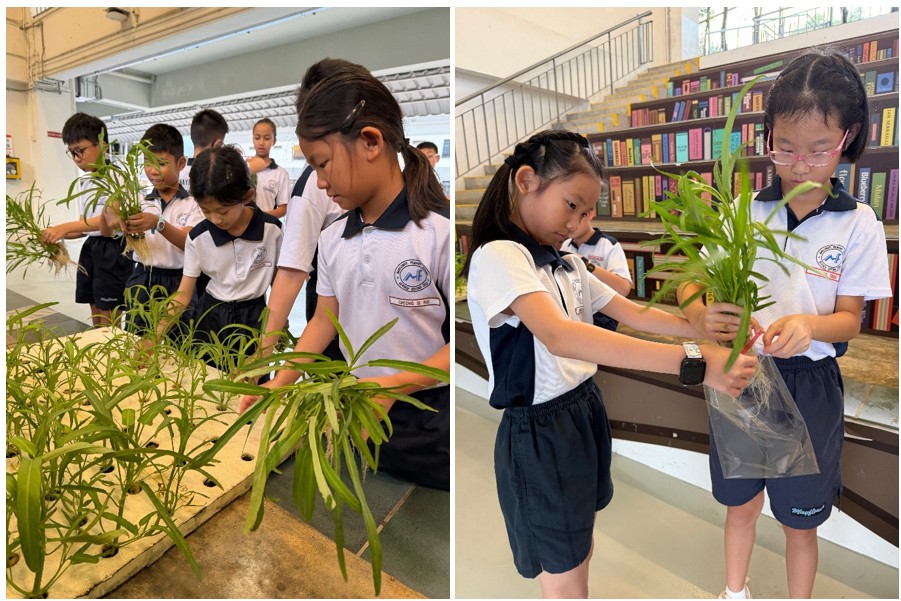
Through hands-on activities, students develop important life skills such as creativity, curiosity, teamwork, and responsibility. They also gain insights into the processes involved in growing vegetables and experience the joy of harvesting their own crops such as kangkong or Chinese cabbage. The programme helps students appreciate the importance of sustainability and food security in an increasingly urbanised world.
Learning Journey to Gardens by the Bay (Primary 6)
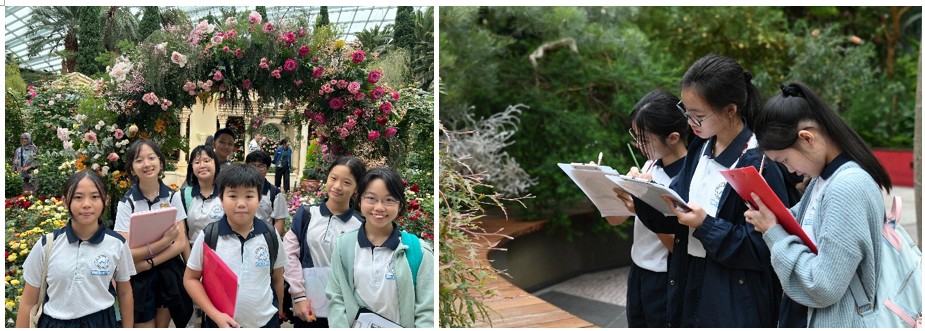
The Primary 6 Learning Journey to Gardens by the Bay provides students with opportunities to deepen their understanding of biodiversity and plant adaptations from around the world. Through guided learning activities and exploratory trails, students examine how different species of plants adapt to survive in various environmental conditions.
The learning journey also integrates Mathematics concepts such as area, perimeter, and estimation through real-world applications within the garden spaces. By connecting classroom learning to authentic environments, students develop observation, inquiry, and analytical skills while gaining a greater appreciation for the relationship between humans and the natural environment.
Championing Environmental Causes Through Eco-Rangers
The Eco-Rangers CCA develops empathetic and environmentally-conscious student leaders who champion sustainability initiatives within the school and community. Through campaigns such as recycling awareness, World Water Day, Earth Day, and the Clean Plate Campaign, students learn to advocate for environmentally responsible habits and behaviours.
Eco-Rangers also engage their peers through school assemblies and interactive recess activities, providing meaningful opportunities for students to explore environmental issues beyond the classroom. The programme nurtures leadership, communication, and advocacy skills while empowering students to become active contributors towards environmental sustainability.
Plant Education Experience @ Yio Chu Kang Secondary
Selected students from the Eco-Rangers CCA and uniformed groups participate in the Plant Education Experience in collaboration with Yio Chu Kang Secondary School. Through this programme, students experience both hydroponic and soil-based farming methods while learning about plant growth, germination, and sustainable farming practices.
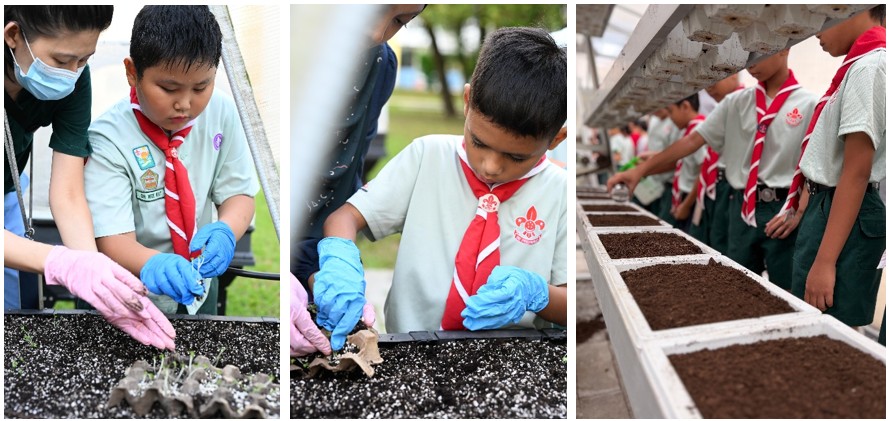
The hands-on experience allows students to connect Science concepts learnt in the classroom to real-life applications through planting, monitoring, and harvesting activities. Students also gain a deeper understanding of how urban farming can contribute to local food resilience and sustainable living practices in Singapore.
Mayflower Innovation TinkerDeck (MIT)
The Mayflower Innovation TinkerDeck (MIT) is a flexible maker space that supports hands-on learning through sustainability and innovation. Aligned with the school’s EcoSTEM ALP, students engage in the Design Thinking process to ideate, prototype, test, and improve meaningful solutions to real-world challenges.
Through purposeful making experiences, students develop E21CC competencies such as inventive thinking, problem-solving, collaboration, and communication. Using recycled materials, safe hand tools, crafting resources, and modular building tools, students create artefacts that promote sustainability and responsible decision-making.
The TinkerDeck also encourages self-directed and collaborative learning through structured routines, visible thinking templates, and peer feedback opportunities. Through these authentic experiences, students strengthen teamwork, self-management, creativity, and eco-stewardship while designing purposeful solutions for the future.